Strengthening Organic Coffee Production
Location: Uganda
Timeline: December 2025 to January 2027
Participants: 4,102 farmers
Partners: Bukonzo Organic Farmers Cooperative Union (Bukonzo)
Image: Judith Mugero, Shared Interest Foundation Project Officer (left); Josinta Kabugho, General Manager of BOCU (middle) and Douglas Maate, Project Coordinator.
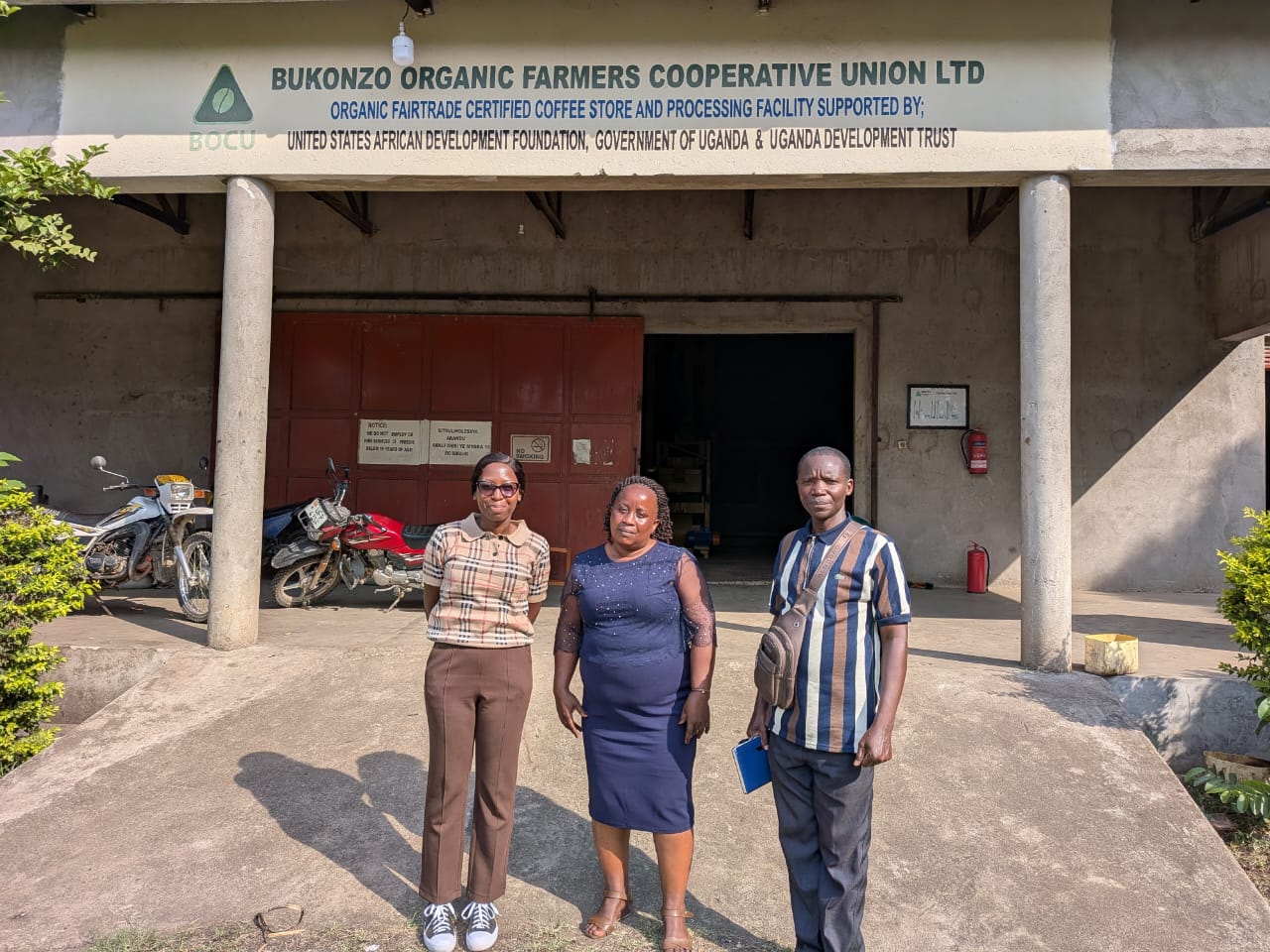
Bukonzo Organic Farmers Cooperative Union (BOCU) is a union of 13 cooperatives with 4,102 farmers. Our current project aims to strengthen organic coffee production through enzyme-based fertiliser production and farmer training, while building resilience and increasing incomes.
Reflections from project visit
The BOCU team reported that they are currently awaiting results from the Government Analytical Laboratory (GAL) regarding pesticide residue testing. From here, the team will proceed with the next phase of activities involving the enzyme produced in March 2026.
The enzyme was developed using locally available materials, including watermelons and pineapples. While awaiting the laboratory results, the team piloted the fertiliser without the enzyme component. The fertiliser was applied at the beginning of July, and farmers have already observed positive results, including improved flowering of coffee trees and a reduction in pests and diseases.
Once the laboratory test results are received, BOCU plans to produce and apply fertiliser containing the enzyme between August and December 2026. This period was selected because some farmers will not be harvesting coffee and will therefore be in a better position to apply and monitor the fertiliser treatments on their farms.
To monitor effectiveness, field officers will identify representative farmers at different stages of production, including those with recently stamped coffee, first-harvest coffee and second-harvest coffee. These farmers will participate in the application of the enzyme-based fertiliser, allowing the project team to observe and compare results across different production stages.
The team also highlighted the importance of strengthening peer-to-peer learning among field officers to facilitate knowledge sharing on organic coffee production practices. However, limited funding for fuel remains a challenge, affecting the frequency of these engagements.
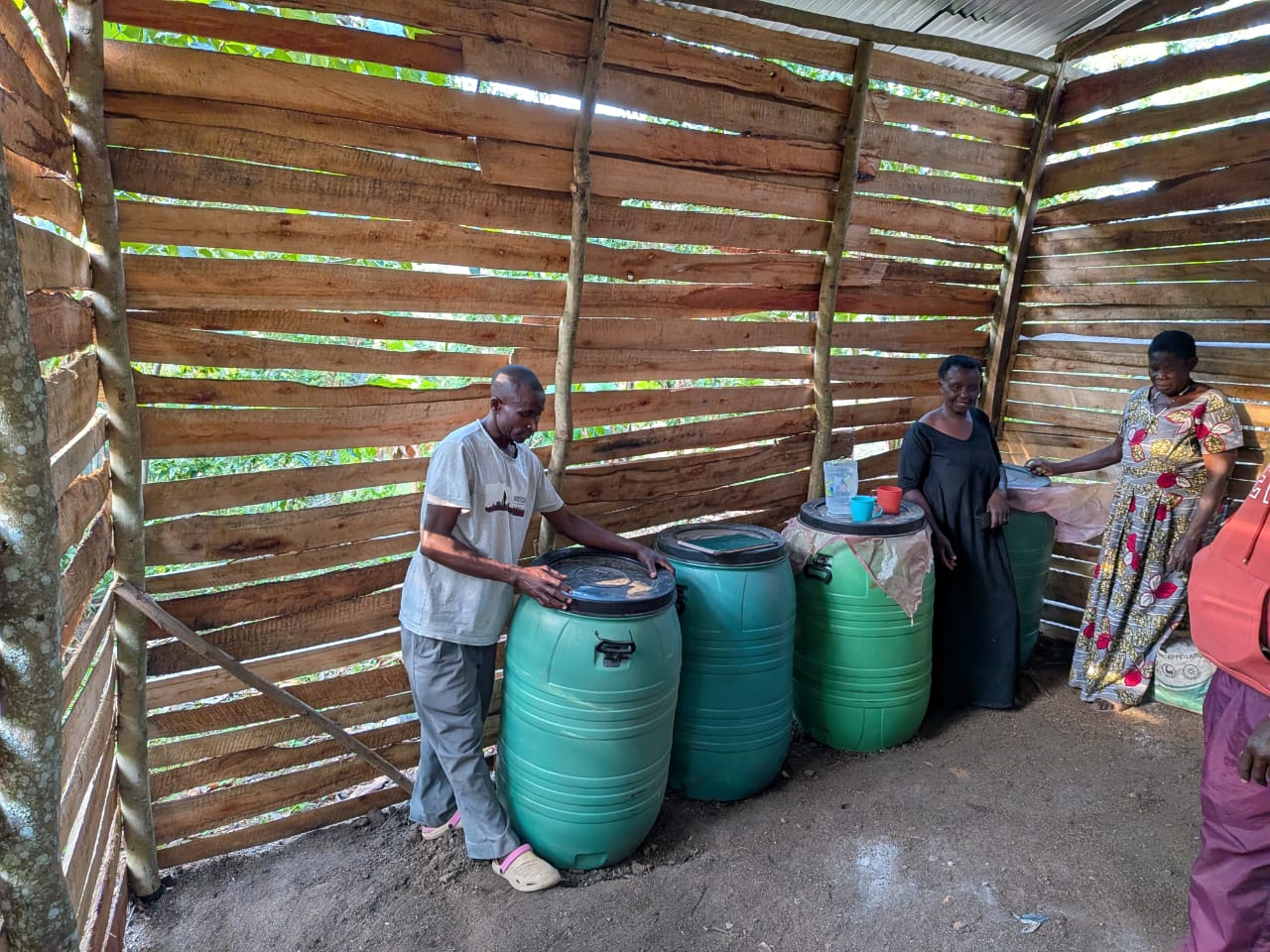
During the visit, I toured the Nyabirongo Production Centre and interacted with five farmers who had been trained in enzyme-based fertiliser production. The farmers expressed appreciation for the training, noting that it enables them to utilise locally available materials rather than relying on pesticides purchased from agro-input shops.
They also highlighted the value of materials such as wood ash and charcoal dust, which were previously discarded but are now recognised as useful inputs in fertiliser production.
The farmers demonstrated a good understanding of the fertiliser production process and emphasized that the practice is helping them promote healthier farming systems while reducing reliance on chemical pesticides. They also noted the potential benefits of producing food with fewer chemical residues, contributing to improved household health and environmental sustainability.
Image: Neckson Bwambale, Manager (left); Biira Violet, Chairperson (middle) and Suzanna Baluku, Vice Chairperson (right), members of Nyabirongo Farmers Cooperative, inspect the fertilizer that was produced with enzyme which is stored in the water drums.
View Project